

When there’s a crash or incident involving trucks, trains, and/or automobiles, lawyers are often faced with piles of data and evidence outside their typical scope of knowledge. They’re left making sense of Event Data Recorder (EDR) downloads, the impacts of weather on roadway friction, accurate accident reconstruction to pinpoint liability, and more.
This is where forensic transportation engineering experts are most valuable.
But for these experts to be effective, legal teams must understand how to best maximize their contributions and present a compelling, credible case. Here are four strategies for enhancing collaboration between lawyers and the transportation engineering experts they work with.
1. Know the Right Questions to Ask
Forensic transportation engineering draws from a broad, continuously evolving toolkit:
- Digital sources: Vehicle black box/EDR data (speed, brake application, throttle), airbag modules, GPS traces, telematics, smartphone location/motion data, dashcam and surveillance footage, traffic signal logs.
- Scene evidence: Skid marks, yaw marks, crush patterns, debris fields, road geometry, signage, lighting, weather, and surface conditions (including measured coefficients of friction).
- Third-party records: Fleet management data, commercial vehicle ECMs (Electronic Control Module), weigh station logs, hours-of-service, maintenance and inspection records.
- Analytical software: Crash simulation (e.g., momentum analysis, kinematics), mapping tools, sight-distance and stopping-distance calculations, time–distance analyses.
There are also emerging tools such as drone-based photogrammetry for precise 3D scene models that offer experts even further insight into a crash.

It’s vital for early conversations to take place between lawyers and experts to discuss what tools are available for a specific case. Some questions legal teams should consider asking include:
- Which datasets could corroborate or refute each witness’s account?
- What data will degrade or be overwritten first, and how do we preserve it now?
- Are there simulation tools to model alternative scenarios consistent with the record?
- What measurements (friction, grade, lighting) would meaningfully reduce uncertainty?
- What third-party sources could fill current gaps (fleet telematics, cell data, signal logs)?
2. Establish Guidelines for Clear Communication
Law and engineering are two sectors that can often default to jargon. Forensic transportation engineering experts might rely on terms like kinematic analysis, drag factor, or Delta-V, while legal teams talk about proximate cause, foreseeability, or standard of care.
Using industry-specific language that the other party does not fully understand can lead to confusion, missed arguments, or misinterpreted conclusions. To avoid this, a kickoff alignment meeting is a great opportunity to define key terms—both ways. Everyone should understand how the court needs to hear key vocabulary as well as how science and math define those same terms. This is also the ideal time to identify any jurisdiction-specific nuances.
Beyond that, experts and legal counsel can maintain effective, open lines of communication through:
- Keep a running glossary for the team (and, later, for report consistency).
- Use analogies to bridge technical and legal narratives (“Coefficient of friction is like the ‘grip’ between tire and road—lower grip on wet pavement increases stopping distance.”)
- Bring in hypothetical case examples when possible.
3. Select the Most Effective Visual Media
Oftentimes, transportation-litigation cases hinge on concepts that come across as abstract when only spoken about, such as motion and time. These ideas need to be visually represented to translate complexity into comprehension.
It’s important for lawyers and forensic transportation engineering and crash reconstruction experts to work together to determine which medium will be most effective:
- 2D graphics
- 2D visualization tools
- Static photos
- 3D visualization tools
- Actual video
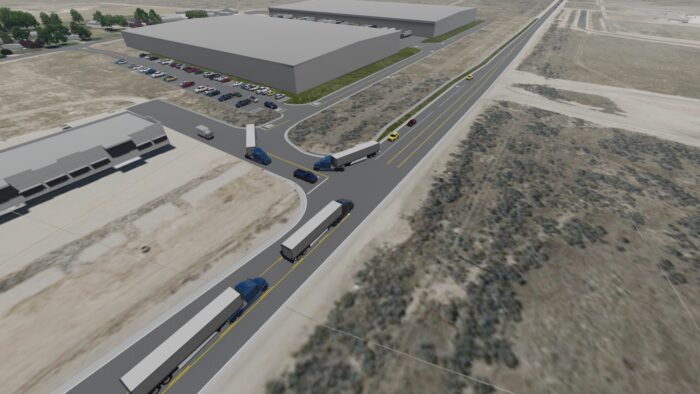
Each of these is beneficial in specific circumstances. For example, 2D visualization tools are perfect for showing sequences and relationships without overwhelming depth; however, if spatial understanding is critical, then 3D visualization tools are often the better option.
4. Leverage Creativity and Storytelling
Forensic transportation engineering delivers data and facts, but it is stories that are often the most persuasive. In ongoing collaboration. legal teams and experts craft relatable narratives that frame findings in a way that is accurate, memorable, and convincing.
Some potential techniques include:
- Develop detailed timelines: These can be used to align elements such as driver actions, signal phases, and distances traveled to show inevitability or avoidability.
- Use analogies: Comparisons are an easy way to make difficult concepts more understandable. For example, comparing momentum to everyday experiences, “like sliding on a damp floor in socks versus rubber-soled shoes.”
- Scenario-based storytelling: Place the listener, whether that’s a jury, mediator, judge, or other legal consul, into the event by walking them through the event. This can look like, “From the driver’s perspective at second three, the truck cresting the hill obscured the stopped traffic until…”
Build a Strong Case Together
At its best, forensic transportation engineering does more than analyze crashes—it helps to translate complex data into clear, defensible explanations of what happened at a crash and, often more importantly, why.
Strategic collaboration between legal teams and transportation engineering experts can only happen of both parties communicate openly. But when this is done, it can result in a compelling visual and narrative presentation that is both technically rigorous and understandable to decision-makers.
Learn More About Us
Below are the areas of expertise our team brings to cases. To learn more about these services, visit www.kittelsonllc.com.