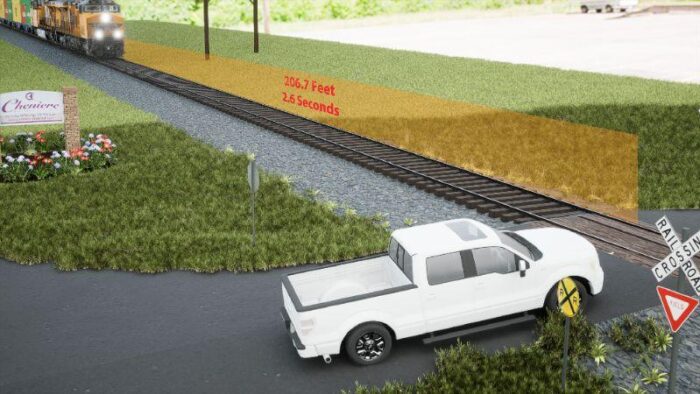
Forensic transportation engineering plays a crucial role in understanding the “why” and “how” of crashes involving trains, planes, and automobiles. When engineering principles meet the world of investigation, we cannot only uncover the root causes of crashes, but we can also assist in determining liability and inform safety enhancements that make travel safer for the future.
In the past decade, technology and updated protocols amid rising electric vehicle (EV) adoption have forced the field to rapidly evolve. These advancements allow experts to reconstruct events using data from black boxes, drones, and even mobile devices. The result? More defensible, evidence-based conclusions that can be presented in court.
Guiding Principles for Accident Reconstruction
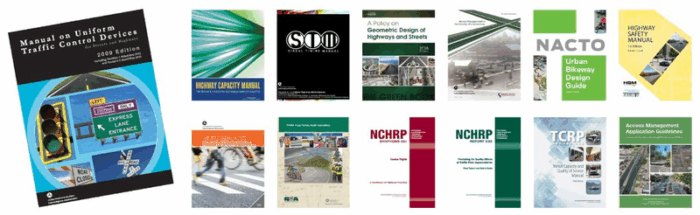
Work in forensic transportation engineering is grounded in industry standards. These guidance documents are essential for evaluating compliance and determining liability in accident reconstructions. Key publications provide benchmarks for assessing design, signage, and safety practices, and updates in recent years have been instrumental in informing forensic practices. The following three guidance documents typically play key roles in tort liability cases:
Manual on Uniform Traffic Control Devices
The Manual on Uniform Traffic Control Devices (MUTCD) establishes national criteria for traffic control devices, including signs, signals, and markings. Updated to its 11th Edition in December 2023, the most recent version introduces changes for pedestrian safety, speed management, and vulnerable road users, which can influence forensic analyses of non-compliance in crashes.
For forensic engineers, when reviewing a case, it’s essential to use the MUTCD edition that was in effect at the time the facility was built. This ensures the use of the appropriate guidelines from that period, rather than those in place at the time of a crash.
A Policy on Geometric Design of Highways and Streets
A Policy on Geometric Design of Highways and Streets (Green Book) offers comprehensive guidance on roadway geometry, with ongoing revisions noted in 2023 to incorporate safety for all users. In forensics, it is used to evaluate if design elements like curves, sight distances, and lane widths meet standards, or potentially lead to accidents. Similarly to the MUTCD, it is important to identify what edition was in place at the time the facility was constructed.
Highway Safety Manual
The AASHTO Highway Safety Manual (HSM) provides quantitative methods for predicting crash frequencies and evaluating countermeasures. In forensic contexts, HSM models assist in assessing whether safety analyses were adequately performed during planning or design phases.
The second edition of the AASHTO Highway Safety Manual (HSM) is slated for late 2025/early 2026.
Technological Advancements in Crash Analysis
Technology has transformed the way forensic transportation engineers analyze accidents.
Two key advancements have been especially impactful.
1. How Data is Collected in the Field
Accurate field data remains central to forensic investigations. Engineers gather measurements from skid marks, gouges, vehicle rest positions, and roadway conditions. Technological advancements in collecting this information have evolved with the introduction of:
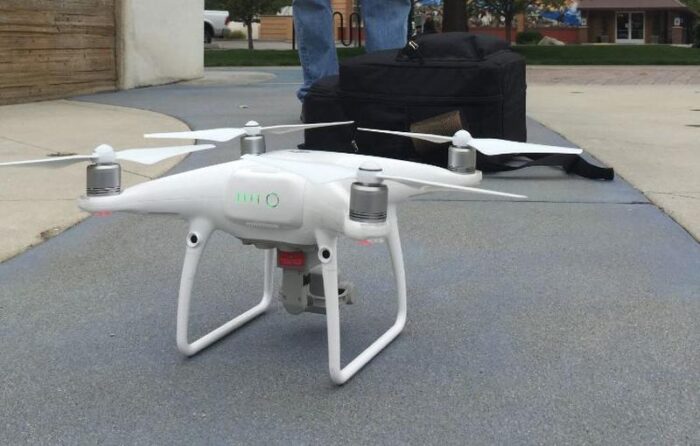
- Drones, or unmanned aerial vehicles (UAVs). These have become indispensable in forensic transportation engineering. They allow engineers to capture aerial imagery of accident scenes, especially in complex highway interchanges or large-scale incidents. Drones can also generate orthomosaic maps and 3D models that accurately represent vehicle positions and roadway geometry.
- Smartphones. As the capabilities of smart devices continue to increase, they are increasingly relevant in forensic cases. Many modern vehicles communicate with smartphones via apps that track driving behavior, speed, location, and time. This easily accessible data, combined with GPS history from devices, can be used to corroborate witness statements and determine vehicle trajectories.
2. How to Harness Vehicle Data for Precision Analysis
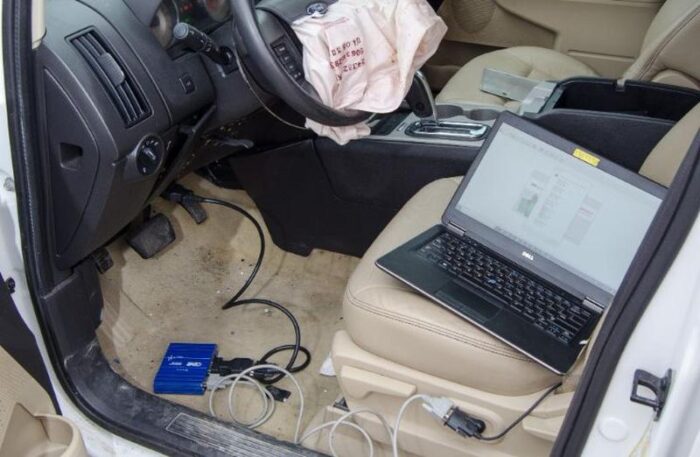
One of the most significant changes in forensic transportation engineering is the widespread availability of vehicle event data recorders (EDRs). These systems, often called “black boxes,” offer irrefutable snapshots in forensic cases. They record information such as speed, throttle position, braking events, and airbag deployment in the seconds before a collision. By downloading EDR data, forensic engineers can reconstruct events with a high-level of precision.
Modern vehicles may also contain ADAS (Advanced Driver Assistance Systems) data, including lane departure warnings, collision avoidance activations, and adaptive cruise control behavior, all of which can inform determinations of causation and liability.
The Evolution of Vehicles
The types of vehicles on the road continue to evolve. In 2024, there were approximately 4.1 million electric vehicles (EVs) on the road—an increase from the 2 million EVs in 2022 and 1.3 million in 2021. This change has introduced new considerations in crash reconstruction. For example, these vehicles are generally heavier than conventional internal combustion vehicles due to battery packs.
Higher vehicle mass affects:
- Momentum
- Braking distance
- Impact severity
These are all critical factors in forensic analyses. For example, a 1,000-pound increase in vehicle weight can significantly alter kinetic energy calculations during a collision, influencing both vehicle deformation and occupant injury patterns. Forensic engineers must update reconstruction models to account for these differences.

Delivering Defensible Forensic
The ultimate goal of an investigation is to produce scientifically sound and legally defensible results. To do that, investigators must address the complex dynamics of today’s transportation environment, but at the same time, leverage the guidance documents that shaped the construction of the facilities versus what guidance is in place at the time of a crash.
By integrating these tools and methods, forensic transportation engineers improve the reliability and credibility of their analyses. This only strengthens their role as expert witnesses in legal proceedings.